
The global demand for high-quality steel pipes continues to grow rapidly, especially in oil & gas transportation, energy infrastructure, offshore projects, and industrial pipeline construction. As more manufacturers enter the market, one reality becomes increasingly clear:
Building a successful API 5L pipe mill is not simply about purchasing machines.
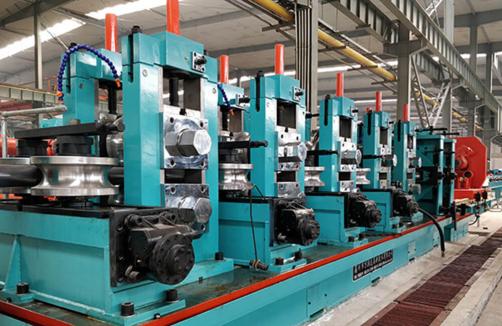
A modern API 5L production line is a complete manufacturing system that requires deep integration between forming technology, welding stability, automation control, material handling, and long-term production consistency.
In many cases, pipe manufacturers focus heavily on equipment specifications during the investment stage, but underestimate the importance of process engineering and operational stability.
This often leads to problems such as:
- Unstable weld seams
- High rejection rates
- Inconsistent dimensional tolerance
- Poor hydrostatic test performance
- Frequent downtime
- Difficulty reaching API standards consistently
For high-grade oil and gas pipes, production stability is often more important than theoretical maximum speed.
The Growing Demand for API 5L Steel Pipes
The expansion of global energy infrastructure is driving significant investment in:
- Oil transmission pipelines
- Natural gas transportation systems
- Offshore energy projects
- Refinery infrastructure
- Water transmission systems
As a result, many steel pipe manufacturers are upgrading from conventional ERW pipe production toward API-grade pipe manufacturing capability.
This transition requires more than upgrading a single machine. It requires a complete understanding of the entire production process.
Key Factors in a Reliable API Pipe Mill
1. Forming Precision
Stable pipe geometry begins with accurate strip edge preparation and forming alignment.
Even small deviations during the forming stage may affect:
- Weld seam quality
- Roundness
- Sizing consistency
- Final pipe performance
2. High Frequency Welding Stability
High-frequency welding is one of the most critical stages in ERW pipe production.
Reliable welding depends on the balance between:
- Heat input
- Squeeze force
- Welding angle
- Cooling control
- Strip material consistency
Long-term welding stability directly affects pipe quality and plant efficiency.
3. Automation and Synchronization
Modern pipe mills increasingly require intelligent synchronization between:
- Motors
- Drives
- Flying saw systems
- Accumulators
- Sizing sections
- Online inspection systems
Automation not only improves production efficiency but also reduces operator dependency and production variation.
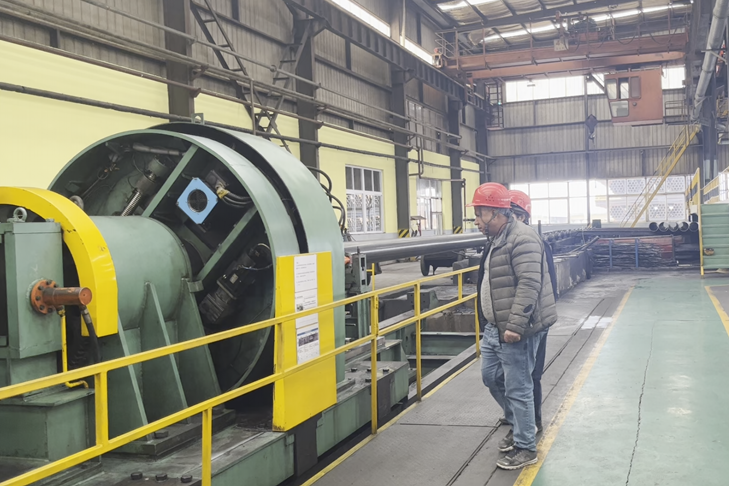
4. Production Line Layout
A well-designed production line layout improves:
- Material flow
- Maintenance efficiency
- Operator safety
- Future expansion capability
In large API pipe projects, layout planning often becomes a major factor affecting long-term operational cost.
The Future of Steel Pipe Manufacturing
The global steel pipe industry is evolving toward:
- Higher automation
- Smarter manufacturing
- Lower energy consumption
- Better process stability
- Digital production management
Customers are no longer evaluating suppliers only by equipment price.
They increasingly focus on:
- Technical experience
- Project implementation capability
- Long-term support
- Production reliability
- Process knowledge
For manufacturers investing in API 5L and API 5CT pipe production, choosing the right production partner has become a strategic decision rather than a simple procurement process.
After more than 25 years focused on steel pipe production lines, we continue to believe that sustainable manufacturing success comes from combining engineering experience, stable process design, and long-term customer cooperation.
#API5L #SteelPipe #TubeMill #ERW #OCTG #PipeManufacturing #OilAndGas #IndustrialAutomation #SmartManufacturing #SteelIndustry #ERWtubemill #Pipemill
Contact WRD