
When investing in a new API Pipe Production Line, one of the earliest strategic decisions is how the project should be sourced.
Should the investor select one main engineering partner for the complete production system?
Or purchase individual machines from multiple specialized suppliers?
Both approaches can work.
But they create very different project risks.
After more than 25 years involved in steel pipe production line projects, we believe investors should evaluate this decision based not only on equipment price but also on system integration responsibility.
What Is the Multi-Supplier Approach?
Under a multi-supplier model, the investor may purchase different sections independently:
· Coil preparation equipment
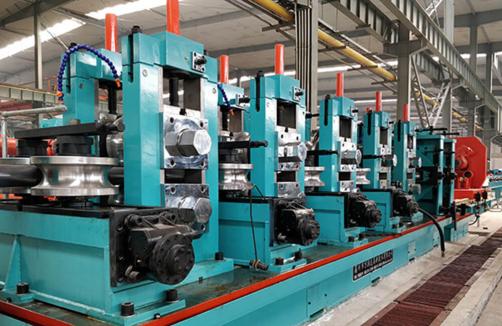
· ERW Tube Mill
· HF welding system
· NDT equipment
· Hydrostatic tester
· Finishing equipment
· Automation
· Material handling
This approach can provide greater freedom to select specialized suppliers.
It may also create competitive procurement opportunities.
However, the investor effectively becomes the system integrator.
Where Does the Risk Appear?
The challenge usually begins at the interfaces.
Who is responsible when:
· Mechanical interfaces do not match?
· Production speeds are not synchronized?
· Communication protocols differ?
· Pipe handling between sections becomes inefficient?
· One supplier's machine creates a bottleneck for another?
Each individual machine may meet its specification while the complete plant still underperforms.
This is the difference between equipment performance and system performance.
What Does a Turnkey Approach Change?
Under a turnkey or integrated engineering model, one party takes greater responsibility for coordinating the complete manufacturing process.
This can include:
· Process design
· Equipment configuration
· Layout engineering
· Interface management
· Automation integration
· Installation coordination
· Commissioning
· Production ramp-up
The key value is not simply convenience.
It is clearer responsibility for the performance of the complete system.
Does Turnkey Always Mean More Expensive?
Not necessarily.
A multi-supplier procurement strategy may achieve lower prices for individual machines.
But investors should also calculate the cost of:
· Additional engineering
· Project coordination
· Interface modifications
· Commissioning delays
· Multiple technical teams
· Responsibility disputes
The lowest sum of individual equipment quotations does not automatically create the lowest total project cost.
When Can Multi-Supplier Work Well?
A multi-supplier approach can be successful when the investor already has:
· Strong internal engineering capability
· Experienced pipe mill specialists
· Established automation standards
· Proven project management
· Clear interface specifications
Large experienced steel groups may be capable of managing this model effectively.
For a company entering API pipe manufacturing for the first time, the integration risk can be much higher.
Ask One Important Question
Before selecting the procurement model, ask:
Who owns the performance of the complete production line?
If the answer is unclear before contract signing, it will probably become even less clear during commissioning.
Final Thoughts
An API Pipe Mill is a system, not a collection of independent machines.
After more than 25 years in steel pipe production equipment and project engineering, we have learned that interface management is one of the most underestimated risks in complex production lines.
The right procurement model depends on the investor's internal capabilities.
But regardless of the model selected, someone must take responsibility for making the complete manufacturing system work together.
#TurnkeyProject #APIPipeMill #ERWTubeMill #API5L #SteelPipeManufacturing #ProjectManagement #IndustrialEngineering #PipeMillEngineering
Contact WRD