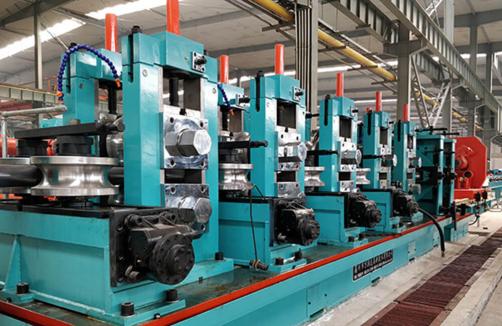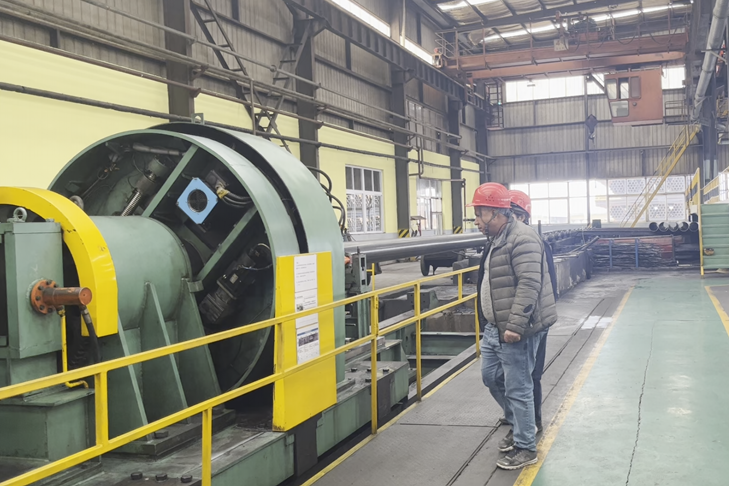

When purchasing a new ERW Tube Mill or API Pipe Mill, most manufacturers focus on major equipment specifications.
They compare forming capacity, welding systems, production speed, automation, and total investment.
However, one important question is often left until much later:
What happens when a critical component fails after the production line has entered commercial operation?
A well-designed spare parts strategy can be just as important to long-term production reliability as the original equipment selection.
1. Not All Spare Parts Have the Same Importance
In a steel pipe production line, spare parts can be divided into different categories.
Critical components
These are parts whose failure may stop production completely, such as certain drive components, control modules or specialized mechanical assemblies.
Wear parts
These are components expected to require periodic replacement due to normal operation.
Standard industrial components
These may include commercially available bearings, sensors, electrical devices and other standardized parts.
Each category requires a different inventory strategy.
Keeping every possible spare part in stock is expensive. Keeping no critical spares can be even more expensive.
2. Evaluate Downtime Cost Before Spare Parts Cost
Consider a production line where one critical component has a relatively modest purchase price but requires several weeks to replace.
The direct component cost may be small.
The production loss could be substantial.
A useful approach is to evaluate spare parts according to:
· Probability of failure
· Production impact
· Replacement lead time
· Availability of alternatives
· Repair complexity
· Inventory cost
This helps manufacturers prioritize spare parts based on operational risk rather than purchase price alone.
3. Standardization Can Reduce Long-Term Risk
During equipment procurement, buyers should ask which components are internationally standardized and which are proprietary.
For example:
Can replacement bearings be sourced locally?
Are the electrical components supported in the destination country?
Can the customer obtain compatible sensors and control components without waiting for international shipment?
Standardization does not eliminate the need for specialized parts, but it can improve maintainability and reduce dependence on a single supply channel.
4. Maintenance Documentation Is an Asset
A reliable tube mill should be supported by clear technical documentation, including:
· Mechanical drawings
· Electrical schematics
· Spare parts identification
· Preventive maintenance schedules
· Lubrication requirements
· Recommended replacement intervals
Without accurate documentation, even experienced maintenance teams can struggle to identify the correct replacement component.
5. The Best Spare Parts Strategy Begins During Procurement
Spare parts planning should not begin after commissioning.
During equipment selection, manufacturers should discuss:
· Recommended commissioning spares
· Two-year operational spare parts
· Critical long-lead components
· Local sourcing possibilities
· Technical support arrangements
These decisions influence the long-term operating cost of the production line.
Final Thoughts
The reliability of an ERW Tube Mill is not determined only by how well it performs when everything is working.
It is also determined by how quickly the factory can recover when something goes wrong.
For steel pipe manufacturers, an effective spare parts strategy is not simply a maintenance expense.
It is an investment in production continuity.
#ERWTubeMill #APIPipeMill #SteelPipeManufacturing #IndustrialMaintenance #SpareParts #ManufacturingReliability
Contact WRD