
As global demand for oil & gas transportation infrastructure, OCTG products, and energy pipeline systems continues to grow, more manufacturers and investors are evaluating opportunities to establish modern welded steel pipe production facilities compliant with API 5L and API 5CT standards.
However, many projects face critical challenges during planning and implementation:
- - How to select the right forming technology?
- - How to ensure long-term dimensional stability and weld quality?
- - How to achieve stable production for high-grade steel materials?
- - How to integrate inspection, hydrotesting, and finishing systems efficiently?
- - How to reduce future maintenance and operational risks?
-
For investors and manufacturers entering this sector, selecting not only the right equipment but also the right engineering partner is often the deciding factor between a successful project and a costly lesson.
The Growing Demand for API Standard Pipe Production
The global oil & gas industry increasingly requires:
- - API 5L line pipes for pipeline transportation systems
- - API 5CT pipes for casing and tubing applications
- - High-strength steel grades
- - Improved weld integrity
- - Higher dimensional precision
- - Automated inspection and traceability systems
-
As a result, modern pipe mills are evolving from standalone forming machines into fully integrated intelligent production lines.
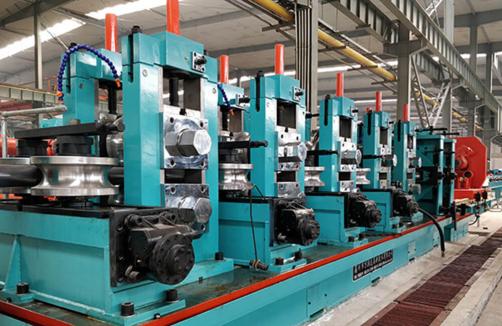
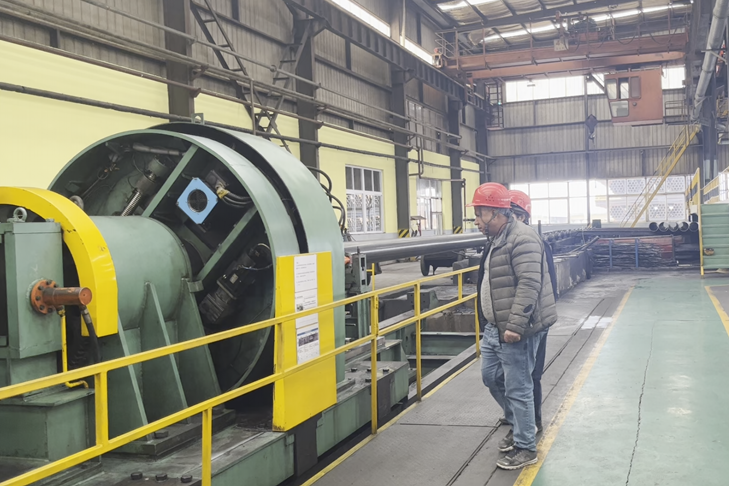
A complete welded steel pipe production line today typically includes:
- - Coil preparation systems
- - Slitting lines
- - ERW or spiral pipe forming systems
- - High-frequency welding systems
- - Online seam annealing
- - Sizing and straightening units
- - Hydrostatic testing
- - Ultrasonic and eddy current inspection
- - End facing & beveling
- - Pipe handling & packaging systems
-
The coordination between these systems directly impacts production efficiency, yield rate, and final pipe quality.
Key Technical Factors When Planning a Pipe Mill Project
1. Material Compatibility
Many projects underestimate the difficulty of processing:
- - X70 / X80 high-grade steel
- - Thick-wall materials
- - Large-diameter pipes
- - High-strength API grades
-
The forming stability, welding process, and sizing precision must all be engineered specifically for these materials.
2. Full-Line Process Integration
A pipe mill is not simply a collection of machines.
Real production stability depends on:
- - Speed synchronization
- - Automatic control integration
- - Material flow design
- - Roll tooling precision
- - NDT system coordination
-
Poor integration often leads to:
- - Frequent downtime
- - Weld defects
- - Dimensional inconsistency
- - Low production efficiency
-
3. Inspection & Quality Assurance
For API-standard production, inspection systems are not optional.
Modern lines increasingly require:
- - Online ultrasonic testing
- - Eddy current inspection
- - Hydrostatic pressure testing
- - Automated marking & traceability
-
These systems are essential for meeting international customer requirements.
Why Experience Matters in API Pipe Mill Projects
In welded steel pipe manufacturing, engineering experience is often more valuable than equipment specifications alone.
A supplier may provide machinery drawings, but successful commissioning depends on:
- - Real production experience
- - Material behavior understanding
- - Process optimization capability
- - FF Forming, FFX forming, W forming choice
- - Roll quick change methods solution
- - Installation & commissioning know-how
- - Long-term technical support
Over the past 25 years, WRD / TJZD has focused extensively on welded steel pipe production line engineering and manufacturing, especially for oil & gas applications.
We have accumulated significant experience through successful implementations of complete API 5L and API 5CT production lines across both domestic and international markets.
Our projects cover:
- - ERW pipe mills
- - Spiral welded pipe production lines
- - Precision finishing systems
- - Online testing solutions
- - Complete turnkey pipe mill integration
-
Through long-term cooperation with customers worldwide, we understand that every project has unique technical, operational, and investment priorities.
Therefore, the most effective solution is never simply “standard equipment,” but rather a production system optimized for the customer's actual market and product positioning.
Future Trends in Welded Steel Pipe Manufacturing
The next generation of API pipe mills is moving toward:
- - Higher automation
- - Intelligent production monitoring
- - Energy efficiency
- - Reduced labor dependency
- - Digital production management
- - Integrated quality traceability
Manufacturers that invest in stable, scalable, and high-quality production systems today will be significantly better positioned in the future global energy infrastructure market.
Final Thoughts
Building a successful API 5L or API 5CT welded steel pipe production line requires far more than purchasing machinery.
It requires:
- - Process expertise
- - Engineering integration capability
- - Long-term technical understanding
- - Reliable implementation experience
For companies planning new investments in oil & gas pipe manufacturing, selecting an experienced full-line solution partner is one of the most important strategic decisions of the entire project.
Contact WRD