
A new API Pipe Mill may operate for 20, 30, or even more years.
The market it serves during the final years of its life may look very different from the market that existed when the equipment was purchased.
This creates an important question for investors:
How should we design today's production line for tomorrow's steel grades?
After more than 25 years in ERW Tube Mill and API Pipe Mill engineering, we believe future-proofing should be considered during the initial engineering stage — but without unnecessarily overdesigning the entire plant.
Higher Strength Changes More Than the Material Specification
When manufacturers move toward higher-strength materials, the effect is not limited to raw material purchasing.
Higher material strength can influence:
· Forming load
· Springback behavior
· Drive requirements
· Roll design
· Mill rigidity
· Welding conditions
· Cutting requirements
Therefore, future steel-grade capability must be evaluated as a complete process question.
Mechanical Capacity Matters
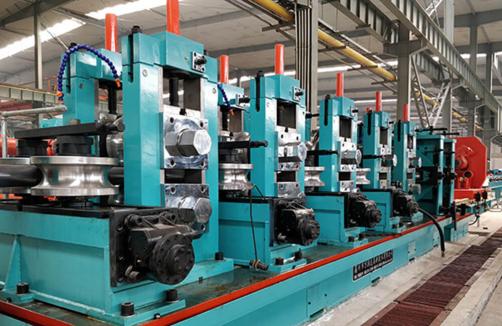
The forming section must provide sufficient rigidity and force for the intended material range.
Project teams should evaluate:
· Mill stand design
· Shaft capacity
· Bearing loads
· Gearbox capacity
· Main drive power
A line designed with no reasonable engineering margin may become expensive to upgrade later.
Welding Capability Must Also Be Considered
Higher-strength pipe products may introduce different process windows and production requirements.
The HF welding system should therefore be selected based on the intended combination of:
· OD
· Wall thickness
· Material
· Production speed
Simply specifying a large welding power number does not guarantee future capability.
The entire forming and welding system must remain compatible.
Do Not Forget the Downstream Process
Upgrading steel grades can also affect downstream equipment.
Depending on the product route, project teams may need to evaluate:
· Cutting
· Straightening
· Testing
· End finishing
· Material handling
Future-proofing only the tube mill while ignoring the rest of the line can simply move the limitation downstream.
Future-Proofing Does Not Mean Buying Everything Today
There is an important balance.
Overdesign increases initial investment.
Underdesign can make future expansion difficult.
A better strategy may be to identify which features are difficult to change later and provide engineering margin there, while allowing modular upgrades elsewhere.
Examples can include:
· Structural capacity
· Foundation design
· Electrical infrastructure
· Factory space
· Equipment interfaces
This creates options without unnecessarily increasing Day-One investment.
Final Thoughts
Future-proofing an API Pipe Mill is not about predicting every future product.
It is about avoiding engineering decisions today that unnecessarily close tomorrow's opportunities.
After more than 25 years in steel pipe production line engineering, we believe the best projects balance:
current economics + realistic future flexibility.
That balance can significantly extend the commercial life of an API Pipe Production Line.
#APIPipeMill #API5L #ERWTubeMill #SteelGrades #SteelPipeManufacturing #FutureProofManufacturing #PipeMillEngineering #WeldedTubeMill
Contact WRD