
When planning a new API Pipe Production Line, one of the most common approaches is to begin with equipment:
What size tube mill do we need?
What welding power should we select?
How many forming stands are required?
What should the production speed be?
After more than 25 years working with ERW Tube Mills and API Pipe Mill projects, our experience suggests a different starting point:
Do not start with the machines. Start with the pipe you intend to sell.
The final product specification should determine the manufacturing process — not the other way around.
What Products Will the Plant Actually Produce?
Before designing an API Pipe Mill, the project team should clearly define the product matrix.
This normally includes:
· Outside diameter range
· Wall thickness range
· Steel grades
· Product length
· API 5L or API 5CT applications
· Required product specification level
· End-user testing requirements
· Target annual capacity
This product matrix becomes the foundation of the entire production line.
A line designed mainly for API 5L line pipe may require a very different downstream configuration from a plant intended to manufacture OCTG casing and tubing.
Why the Process Route Matters
An API pipe production line is not simply:
Uncoiling → Forming → Welding → Cutting
The real manufacturing route may include multiple stages before and after the ERW mill.
Depending on the product, the complete process can involve:
· Coil preparation
· Strip joining
· Accumulation
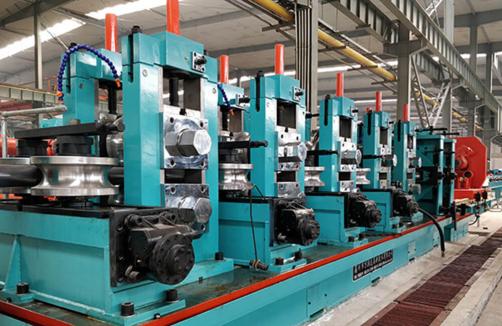
· Forming
· High-frequency welding
· Weld bead treatment
· Online inspection
· Sizing
· Cutting
· Heat treatment where required
· Straightening
· End facing
· Hydrostatic testing
· NDT
· Threading and coupling for applicable OCTG products
· Marking
· Final inspection
· Packing
The required process route depends on what the finished pipe must achieve.
That is why two production lines with the same pipe diameter range can represent very different investments.
Raw Material Should Be Part of the Engineering Discussion
One factor often underestimated during early project planning is the relationship between raw material and equipment design.
The tube mill must handle the intended combination of:
· Strip width
· Wall thickness
· Material strength
· Coil weight
· Yield strength range
As steel strength increases, forming behavior and mill loading can change significantly.
This affects equipment selection such as:
· Mill stand rigidity
· Drive capacity
· Forming design
· Welding system
· Sizing capability
A production line should therefore be engineered around the actual material envelope, not only the maximum pipe diameter.
Forming Technology Should Match the Product Mix
There is no single forming technology that is automatically best for every API Pipe Mill.
Depending on product range and production strategy, manufacturers may evaluate:
· Conventional forming
· FFX forming
· Other flexible forming configurations
For a factory producing a narrow range in large batches, one solution may make economic sense.
For a manufacturer producing many diameters with frequent changeovers, another solution may offer much better lifecycle economics.
The question should always be:
Which forming concept best supports our actual production program?
Welding Is a Process, Not Just a Welder
The high-frequency welding system is obviously important in an ERW API Pipe Mill.
But good welding performance does not depend on welding power alone.
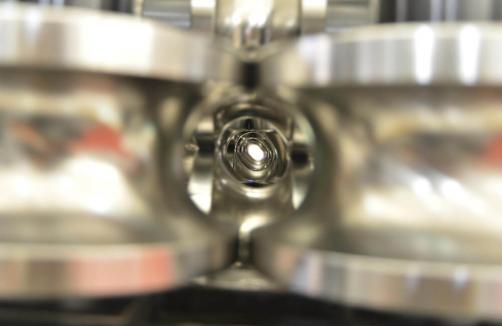
It also depends on the stability of the complete process around the weld point, including:
· Strip edge condition
· Forming accuracy
· V-angle stability
· Squeeze conditions
· Line speed
· Heat input
· Cooling
· Weld monitoring
This is why simply comparing the rated power of two HF welders tells investors very little about the expected pipe quality.
The entire forming and welding process must work as one system.
Downstream Equipment Can Define the Real Capability of the Plant
Another common mistake is concentrating most of the investment discussion on the tube mill itself.
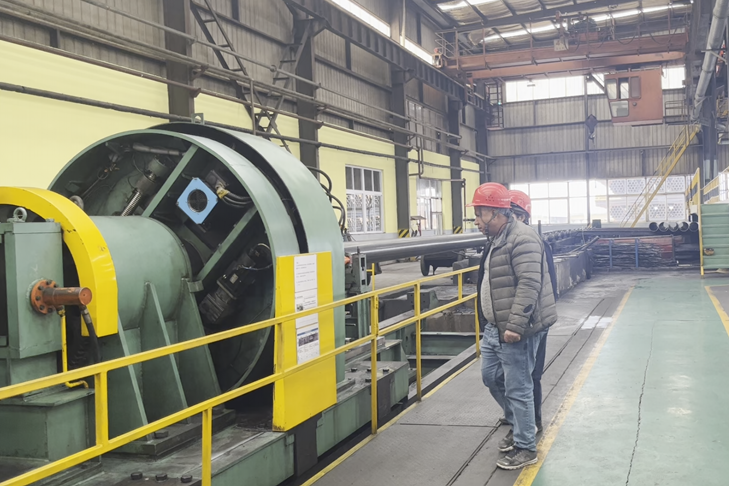
For API products, downstream processes may ultimately determine whether the plant can produce and release finished products efficiently.
Depending on the application, critical downstream equipment can include:
· Hydrostatic testers
· Ultrasonic testing systems
· Pipe straightening equipment
· End finishing
· Threading lines
· Coupling processing
· Measuring and marking systems
· Material handling and buffering systems
A high-performance mill with an undersized finishing section simply moves the production bottleneck downstream.
Design the Complete Manufacturing System
When evaluating an API Pipe Production Line, investors and project managers should ask:
· What pipe will we sell?
· Which standards and customer specifications must we meet?
· Which steel grades will we process?
· Which processes are mandatory?
· Which processes may be required in the future?
· Where are the likely bottlenecks?
· How easily can the line expand?
These questions should be answered before the equipment configuration is finalized.
Final Thoughts
After more than 25 years in the steel pipe equipment industry, one principle has remained consistent across successful projects:
The production line should be designed backwards from the finished product.
A good API Pipe Mill is not simply a collection of high-specification machines.
It is a carefully engineered process in which raw material, forming, welding, inspection, finishing, automation, and material handling all support one manufacturing objective.
For investors, getting the process route right at the beginning can prevent years of expensive modifications later.
#APIPipeMill #APIPipeProductionLine #API5L #API5CT #ERWTubeMill #OCTG #SteelPipeManufacturing #PipeMillEngineering
Contact WRD