
The global demand for high-quality steel pipes continues to grow, driven by energy infrastructure, oil & gas transportation, offshore projects, and industrial applications.
As a result, many steel pipe manufacturers are considering investment in new API Pipe Mills to produce:
· API 5L line pipes
· API 5CT OCTG products
· High-strength ERW steel pipes
However, building an API Pipe Mill is not simply an equipment purchasing decision.
It is a long-term industrial investment that requires careful planning, engineering evaluation, and a clear production strategy.
After more than 25 years specializing in ERW Tube Mills, API Pipe Mills, and complete steel pipe production solutions, we have seen that successful projects usually begin with the right questions before equipment selection.
1. Define Your Product Strategy First
Before selecting an API Pipe Mill, investors should clearly define:
· Product diameter range
· Wall thickness range
· Steel grades
· Annual production capacity
· Target markets
For example:
Producing standard ERW pipes for construction applications requires a different solution from producing API 5L pipes for oil and gas pipelines.
The production requirements determine:
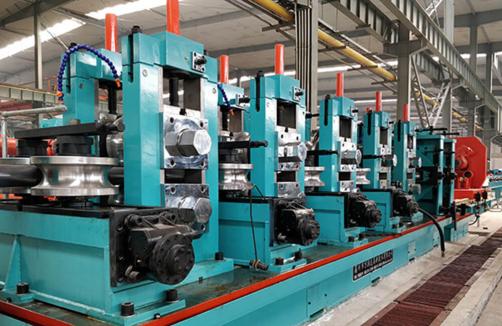
· Forming technology
· Welding system
· Inspection equipment
· Automation level
· Investment scale
2. Select the Right Tube Mill Technology
Modern API Pipe Mills can adopt different technologies depending on production goals.
Important considerations include:
Forming Technology
Options may include:
· Conventional roll forming
· FFX forming technology
· FF forming technology
· Cage forming technology
The selection affects:
· Roll investment
· Changeover efficiency
· Production flexibility
· Long-term operating cost
Welding Technology
Stable high-frequency welding is essential for API applications.
Key factors include:
· Welding power control
· Squeeze roll design
· Seam annealing
· Heat input management
· Process monitoring
3. Think About Lifecycle Cost, Not Only Initial Investment
Many investors focus mainly on equipment price.
However, long-term profitability depends on:
· Production stability
· Energy consumption
· Roll cost
· Maintenance requirements
· Downtime
· Labor efficiency
A slightly higher initial investment may create much better long-term returns if it improves:
· Equipment utilization
· Product quality
· Production reliability
4. Plan for Future Expansion
A successful API Pipe Mill should support future market changes.
Investors should consider:
· Additional product sizes
· Higher steel grades
· Automation upgrades
· Capacity expansion
A flexible production system creates more opportunities over the plant's lifetime.
5. Choose an Experienced Engineering Partner
An API Pipe Mill project involves much more than equipment manufacturing.
It requires integration of:
· Mechanical engineering
· Electrical automation
· Production process
· Installation
· Commissioning
· Operator training
The supplier's experience can directly influence:
· Project schedule
· Startup success
· Production stability
Final Thoughts
An API Pipe Mill is a strategic manufacturing investment.
The most successful projects are not necessarily those with the lowest equipment cost.
They are the projects designed around:
· Correct technology selection
· Stable production processes
· Long-term operational efficiency
With more than 25 years of experience in steel pipe production lines, we continue helping global manufacturers build reliable and competitive API Pipe Mill solutions.
A successful pipe mill is not only installed.
It is engineered for decades of stable operation.
#APIPipeMill #API5L #API5CT #ERWTubeMill #OCTG #SteelPipe #TubeMillInvestment #OilAndGas #ManufacturingEngineering
Contact WRD