
Automation has become an increasingly important part of modern steel pipe manufacturing.
Today, equipment suppliers frequently promote advanced PLC systems, touch-screen interfaces, digital monitoring and intelligent production technology.
These features can be valuable.
But installing more sensors and displaying more information does not automatically create a smarter factory.
The real value of automation comes from how effectively information and control systems work together.
1. Automation Should Solve Manufacturing Problems
Before selecting an automation system, manufacturers should identify the operational challenges they want to address.
Typical objectives include:
· Reducing manual adjustment
· Improving process repeatability
· Monitoring equipment conditions
· Reducing unplanned downtime
· Improving production visibility
· Supporting quality traceability
Technology should be selected to solve these problems, not simply to increase the number of features on an equipment specification sheet.
2. Individual Machines Are Only Part of the System
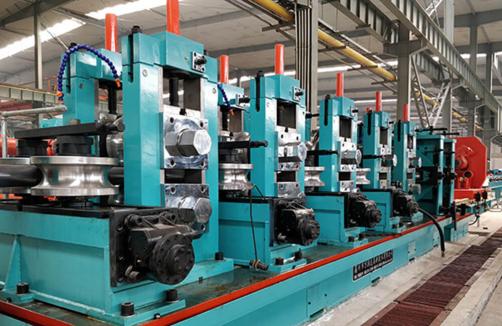
A complete ERW Tube Mill may contain several independent control systems.
These can include:
· Coil handling equipment
· Forming and sizing drives
· High-frequency welding equipment
· Flying cut-off
· Material handling systems
· Inspection equipment
Each section may function correctly on its own.
However, effective automation also requires reliable communication between these systems.
Without proper integration, operators may need to manage several disconnected interfaces and manually coordinate production information.
3. Data Collection Is Not the Same as Data Intelligence
Modern manufacturing systems can collect large amounts of operating data.
But data only becomes valuable when it helps operators and managers make better decisions.
For example, production teams may benefit from understanding:
· Why a line stopped
· Which operating conditions preceded a fault
· How often a particular alarm occurs
· Which product specifications require more adjustment
· Whether maintenance problems are becoming more frequent
The goal is not simply to collect data.
It is to convert production information into useful operational decisions.
4. Open Interfaces and Documentation Matter
When purchasing a new tube mill, investors should consider the long-term accessibility of the automation system.
Important questions include:
· Are communication protocols documented?
· Can authorized engineers maintain the system?
· Can production data be exported?
· Can additional equipment be integrated later?
· Are software backups and recovery procedures provided?
· How will cybersecurity and access permissions be managed?
These questions may have a greater long-term impact than the appearance of the HMI screen.
5. Design for Future Digital Integration
A manufacturer may initially require only basic automation.
Later, the factory may want to connect production equipment with:
· Manufacturing execution systems
· Maintenance management systems
· Quality databases
· Enterprise resource planning systems
· Energy monitoring platforms
Preparing suitable interfaces during the original engineering stage can make future digital upgrades easier.
Final Thoughts
The objective of tube mill automation should not be to make the production line appear technologically advanced.
It should be to make the factory easier to operate, monitor, maintain and improve.
A truly intelligent tube mill is not the one collecting the most data. It is the one using the right data to make better manufacturing decisions.
#TubeMillAutomation #ERWTubeMill #APIPipeMill #PLC #IndustrialAutomation #SmartManufacturing #SteelPipeManufacturing
Contact WRD