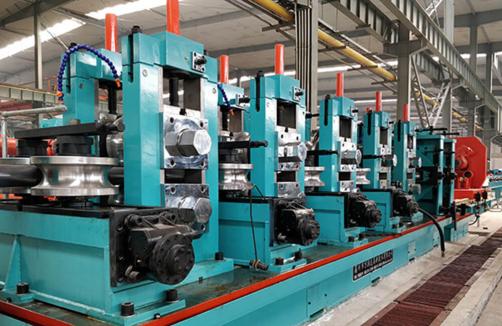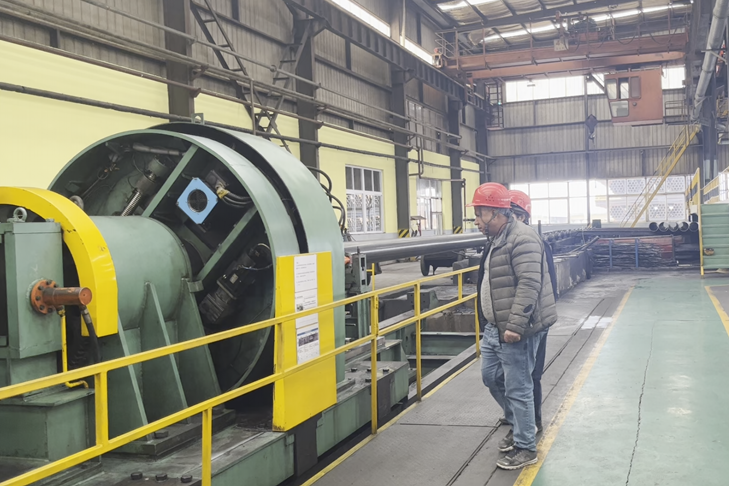

At first glance, API 5L pipe production may look similar to conventional ERW pipe manufacturing.
Both use steel coils, forming systems, high-frequency welding, and sizing processes.
However, producing API 5L line pipes requires a much higher level of process control and manufacturing stability.
API 5L pipes are used in critical applications such as:
· Oil transportation pipelines
· Natural gas transmission systems
· Energy infrastructure projects
Therefore, quality consistency is not optional.
It is essential.
After more than 25 years in the steel pipe industry, we have learned that the biggest difference between standard ERW production and API 5L manufacturing is not only the equipment.
It is the control of the entire process.
1. Higher Requirements for Welding Stability
The welding process is one of the most critical stages in API pipe production.
High-frequency welding parameters must be precisely controlled, including:
· Welding power
· Frequency
· Squeeze pressure
· Strip edge condition
· Welding speed
· Weld seam annealing
Small variations may influence:
· Weld seam quality
· Mechanical performance
· Inspection results
For API 5L production, stable welding performance is the foundation of product reliability.
2. Stricter Dimensional Control
API 5L customers require consistent control of:
· Outside diameter
· Wall thickness
· Ovality
· Straightness
This requires:
· Accurate roll design
· Stable forming process
· Reliable sizing system
Dimensional consistency directly affects pipeline installation and field performance.
3. Inspection Capability Becomes Critical
API pipe production usually requires advanced inspection systems.
Typical systems include:
· Ultrasonic testing
· Hydrostatic testing
· Eddy current inspection
· Online measurement systems
Inspection is not only a final quality check.
It is part of the manufacturing process.
4. Process Stability Is More Important Than Maximum Speed
A common mistake during investment evaluation is focusing only on production speed.
However, API pipe manufacturing requires:
· Stable operation
· Consistent quality
· Low rejection rate
· Reliable delivery
A production line running at a stable speed often creates better profitability than a faster line with frequent interruptions.
5. Engineering Experience Makes the Difference
API Pipe Mills require integration of:
· Mechanical design
· Electrical control
· Welding technology
· Production experience
Equipment specifications alone cannot guarantee successful API production.
Real-world commissioning experience and process knowledge are equally important.
Final Thoughts
API 5L pipe production represents a higher level of steel pipe manufacturing capability.
The difference is not simply producing a stronger pipe.
The difference is building a manufacturing system capable of producing consistent quality every day.
After 25 years working with ERW Tube Mills and API Pipe Mill projects worldwide, we believe successful API production comes from combining:
· Advanced technology
· Stable processes
· Experienced engineering support
#API5Lpipemill #APIPipeProduction #APIPipeMill #SteelPipeManufacturing #TubeMill #OilAndGas #Pipeline #IndustrialEngineering
Contact WRD